Begin with the position, not the machinery.
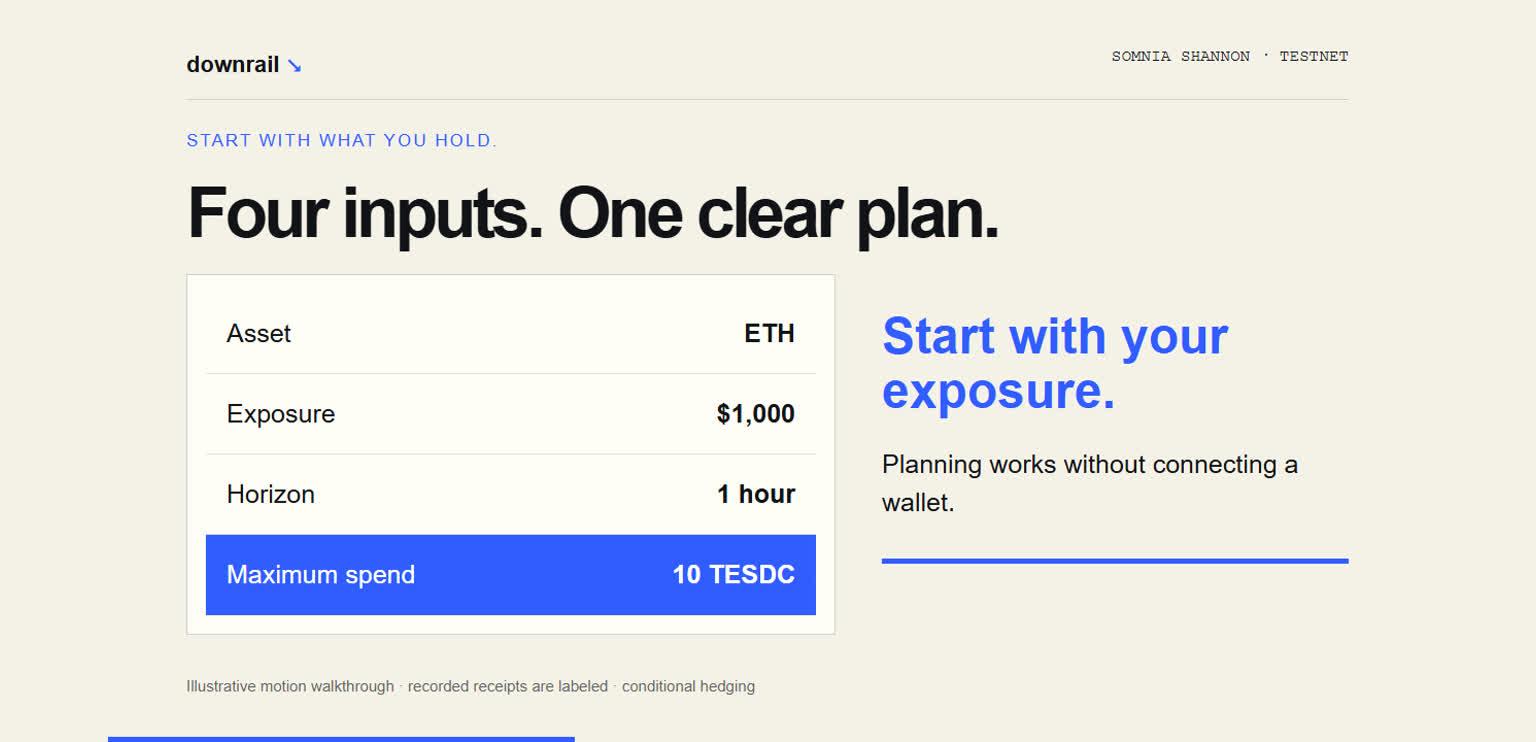
The demo introduces a position and a maximum spend before explaining conditional hedging. This makes the trade-off visible: the user is planning protection, not being promised that risk disappears.
Risk infrastructure · Nuvixes
Conditional hedging with explicit limits, execution evidence, and clear failure states.
Why this exists
The starting point is a person who wants to keep their ETH but wants a boundary around a possible loss. Downrail turns that tension into a planning experience: exposure, horizon, budget, and an explicit review before signing.
The demo introduces a position and a maximum spend before explaining conditional hedging. This makes the trade-off visible: the user is planning protection, not being promised that risk disappears.
The planner connects eligible markets to an unsigned order review. Decoded calls, allowances, and costs make the proposed action inspectable before a wallet is asked to sign.
September changes addressed review reuse, rollover timing, claim verification, and inventory isolation. These are the moments after the first attractive screen—when an old review or an ambiguous claim can undermine the entire experience.
Build journal
Recorded milestones from the build. Dates describe these events, not the entire project history.
Build history records fixes for review reuse, rollover timing, claim verification, and inventory isolation.
The planner hardening and UX release was shipped, followed by submission-documentation updates on September 11.
Where it stands
A published conditional-hedging prototype. Demo amounts and recorded execution examples describe the demonstrated flow, not guaranteed protection or investment outcomes.
The next chapter
Keep tightening failure states, execution review, and the evidence available after an action.
Based on the original Downrail demo and September 7–11 repository history.